Why Do We Eat on Banana Leaves?


Maybe our grandmothers knew something our science is only beginning to look at.
There is something very satisfying about a banana leaf meal. The leaf is fresh, green. The food is hot. You sit down, look at the spread in front of you, happy to feast on the meal. I grew up seeing banana leaves at festivals, family meals and special occasions in Bangalore. Nobody explained the science of it to me. It was simply how a good meal was served. And I still love it.
More than just a plate
Banana leaves contain naturally occurring plant compounds, including polyphenols, flavonoids and tannins. Laboratory studies have found antioxidant and antimicrobial activity in banana-leaf extracts. But here is where I think we need to be careful.
That doesn't mean eating from a banana leaf is a proven health treatment. There isn't strong clinical evidence showing that enough of these compounds transfer from a leaf onto your food to improve your health.
So I wouldn't serve you a meal at Anvaya and tell you the banana leaf is going to fix your digestion. That's not what I believe.

Then why use it?
Because food is more than nutrition.
Ayurvedic and Indian food traditions have long connected eating with freshness, seasonality, balance and the way a meal is experienced. Banana leaves have traditionally been used for serving meals and ceremonial food, particularly across South India. And there are some very simple sensory reasons to love them.
A warm preparation touching the leaf releases a subtle green, vegetal aroma. Banana leaves are also naturally water-resistant and are widely used for wrapping and steaming food, where they can help retain moisture and contribute aroma.
Your nose is part of eating too.Modern sensory research supports something our kitchens have always understood: aroma influences how we perceive and experience food.
At Anvaya, the leaf has a job
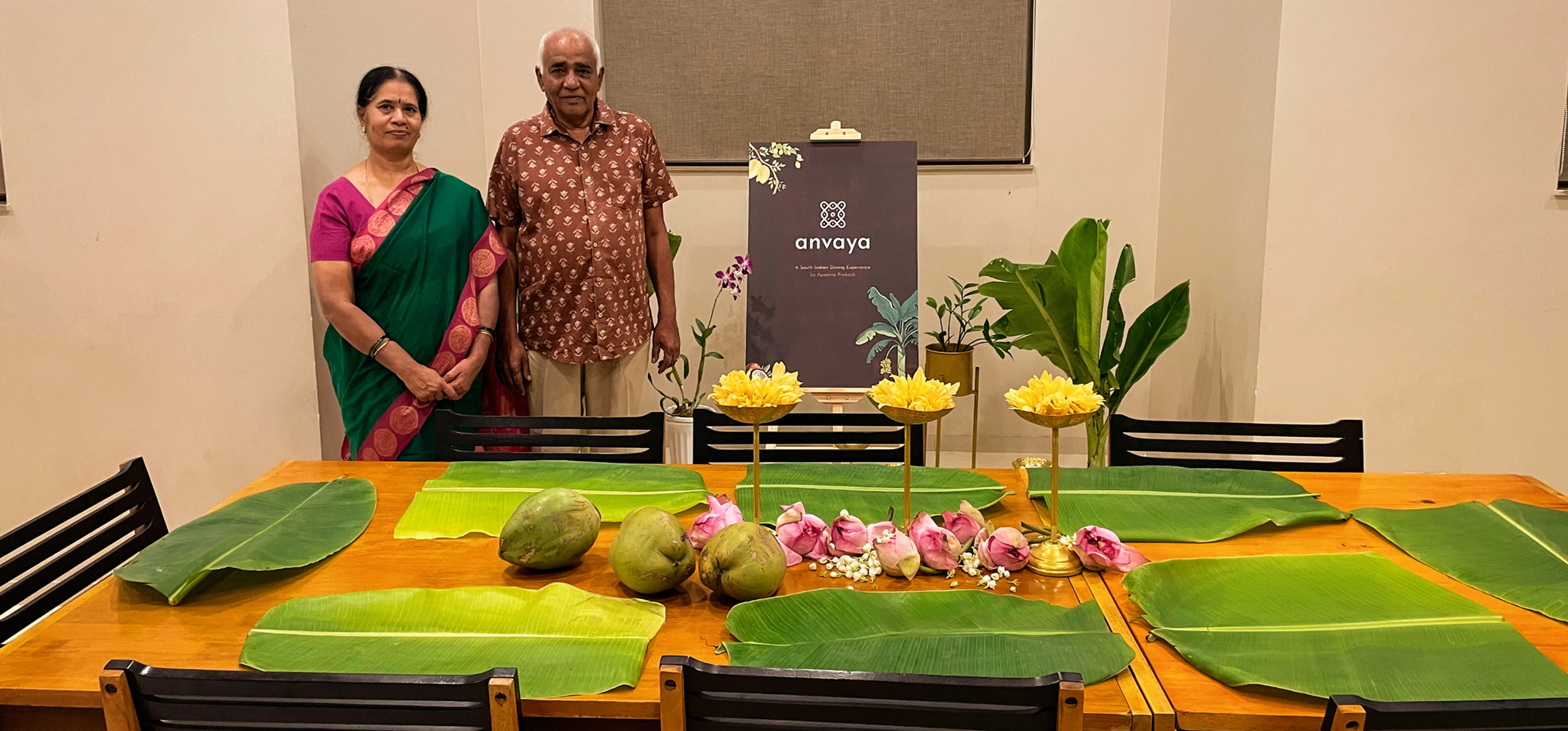
My 13-course Karnataka-inspired vegetarian meal isn't served on a banana leaf just because it photographs beautifully. It changes the way you eat.
There isn't a separate little plate for every preparation.
You make your own combinations.
A little palya with rice.
A spoonful of gojju with something mild.
Ghee, saaru, something crisp, something cooling.
The courses slowly stop being individual dishes and become one meal.
That is what I love about a banana leaf. It doesn't make the food healthier by magic.
It makes you eat differently. And perhaps that's the part our grandmothers didn't need a study to explain.
At Anvaya
Anvaya is a reservation-only private dining experience in Thane, serving a 13-course Karnataka-inspired vegetarian meal on a banana leaf.
Up to eight guests share one table, with a seasonal menu inspired by the family kitchens of Bangalore. The food is made from carefully chosen seasonal ingredients, homemade spice blends and handmade ghee.
No health claims. No gimmicks. Just a very old way of eating that still feels right to me.


Comments